
News
Global Smart Glasses Market Jumps 110% in H1 2025, Meta Dominates While TCL Gains Ground
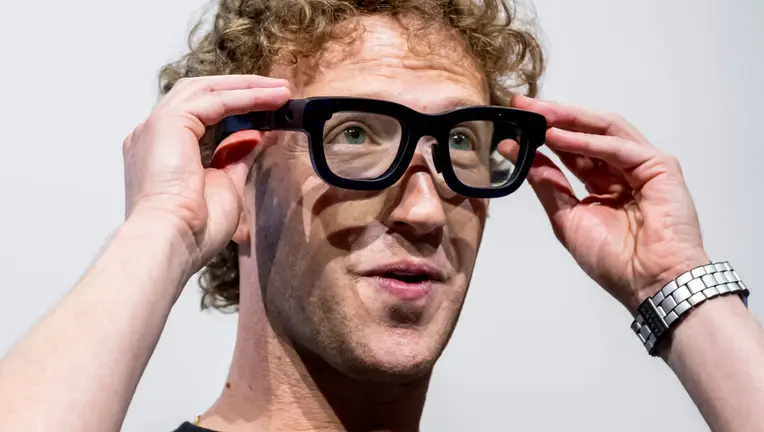
Global smart glasses shipments grew 110% year-on-year in the first half of 2025, according to Counterpoint Research’s Global Smart Glasses Shipment Tracker. Strong demand for Ray-Ban Meta AI Glasses and the entry of new brands such as Xiaomi and Thunderbird Technology (TCL RayNeo) drove the increase.
AI-enabled smart glasses accounted for 78% of total shipments in H1 2025, up from 46% in the same period last year and 66% in the second half of 2024. Meta dominated this segment. Shipments of the Ray-Ban Meta AI Glasses rose more than 200% year-on-year, pushing Meta’s global market share to 73%. Luxottica, Meta’s manufacturing and retail partner, increased production capacity, introduced new styles, and expanded retail sales through its network, including Ray-Ban stores, Sunglass Hut, and LensCrafters.
TCL, through its Thunderbird Technology brand, continued to strengthen its position in the AI smart glasses segment with the RayNeo V3 series. The company leveraged its display expertise to deliver high-quality optics and integrated AI features, securing a competitive spot in the Chinese market and expanding into select overseas regions. Counterpoint notes that TCL’s experience in consumer electronics and global retail partnerships could help it scale further as the segment grows.
Xiaomi’s first AI Glasses became the fourth best-selling model worldwide and the third best-selling in the AI segment despite launching only a week before the end of the period. Strong support from Chinese consumers and Xiaomi’s fan base contributed to its rapid sales. Counterpoint expects Xiaomi to improve performance through software and OTA updates in the coming months.
Image Credit: LiveNOW from FOX
Traditional smart audio glasses from brands such as Huawei, Amazon, and Xiaomi’s Mijia saw declining shipments. Counterpoint attributes this to growing demand for AI glasses with features such as real-time translation, object recognition, and photo and video capture. Alibaba’s Quark AI Glasses are currently testing payment features to reduce reliance on smartphones for outdoor transactions.
Qualcomm introduced the AR 1+ Gen 1 smart glasses SoC, which is 26% smaller and 7% more power-efficient than its predecessor. Several Chinese chipmakers, including Allwinner Technology, entered the market with processors aimed at more affordable models.
Counterpoint now forecasts the global smart glasses market to grow at a compound annual growth rate of over 60% between 2024 and 2029. The firm expects new products from Meta, Alibaba, and other players in the second half of 2025, with Apple also reported to be developing its first AI glasses.
In related news, TCL and Hisense drive growth in global TV shipments as Mini LED adoption accelerates, while TCL CSOT prepares to announce a Gen-8 inkjet OLED investment after reaching the 350 PPI milestone.
(Via)




News
TCL overtakes Samsung in global TV shipments for December 2025
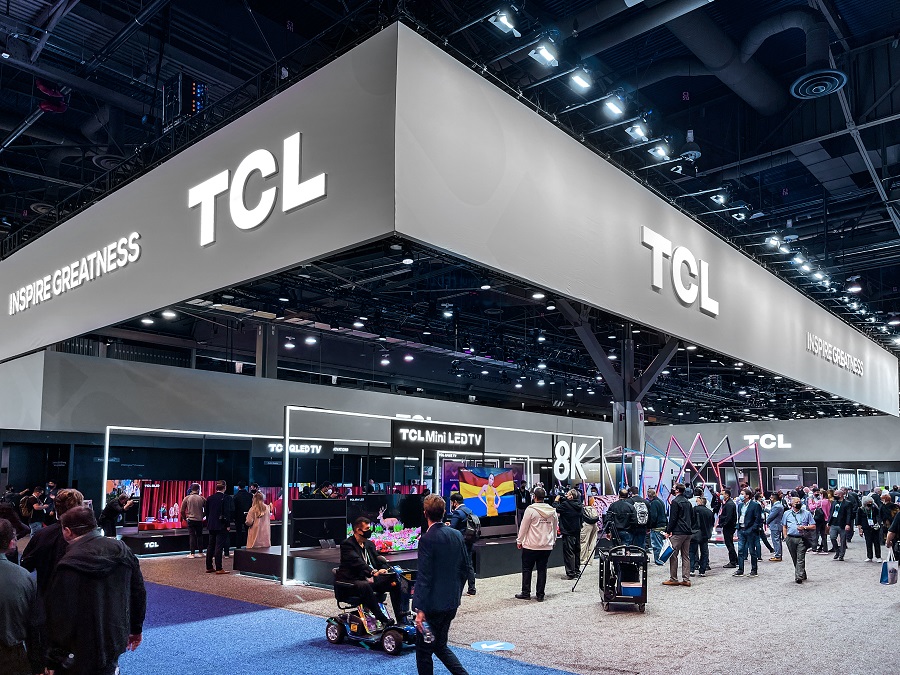
TCL has officially dethroned Samsung as the top global TV shipper for December 2025, according to Counterpoint Research’s latest data. This marks a major milestone for the Chinese electronics giant, whose shipments surged 10% year-over-year (YoY) last month, giving it a commanding 16% market share. Meanwhile, Samsung, the perennial leader, slipped to second place with a 13% share, despite an 8% YoY increase in shipments.
So, what’s behind TCL’s meteoric rise? Aggressive pricing strategies and a robust lineup of mid-range and high-end TVs, including the well-received QM8K and QM9K series, played a key role. The company also launched the budget-friendly T7 series, which was heavily discounted during the holiday season. Combined with strong performance in Asia-Pacific, China, and the Middle East, TCL’s late-year surge was enough to outpace Samsung, at least for December.
However, Samsung still holds the crown for Q4 2025 overall, shipping 2% more TVs than TCL during the period. While North and South America provided growth opportunities for Samsung, declines in Western Europe and the Middle East hurt its performance. On the flip side, Hisense, which took third place in December, saw its shipments plummet 23% YoY, highlighting significant struggles in China’s shrinking TV market.
Looking ahead, TCL’s ambitions could spell bigger trouble for Samsung. The company’s upcoming partnership with Sony’s BRAVIA brand, set to finalize in March 2026, positions TCL to make a serious play in the premium TV market, a territory that Samsung has historically dominated with its high-end OLED and 8K offerings. If TCL can successfully leverage Sony’s reputation in this space, the dynamic of the global TV market could shift dramatically.
For now, TCL’s December triumph might be temporary, but its growth trajectory is impossible to ignore. With a mix of strategic pricing, regional demand timing, and potential premium market expansion, Samsung’s top spot may no longer be as secure as it once was.
News
TCL Shocks Market by Taking Over Sony Bravia TVs

Sony Corporation has announced that it will spin off its home entertainment division and form a new joint venture with TCL Electronics. The partnership gives TCL a 51 percent majority stake, while Sony retains 49 percent. The new company will take control of global operations for Sony’s television and home audio business.
The companies confirmed the agreement through a signed memorandum of understanding. They plan to finalize binding terms by the end of March 2026. The joint venture is expected to begin operations in April 2027, subject to regulatory approvals.
The new entity will handle the entire value chain, including product development, manufacturing, sales, and customer service. Products from the venture will continue to use the Sony and Bravia brand names.
Sony will contribute its picture processing technology, audio expertise, and brand value. TCL will provide its display manufacturing capabilities, global supply chain, and cost-efficient operations. TCL’s recent growth in display technology and global market share positions it to take advantage of Sony’s premium image and distribution network.

Sony CEO Kimio Maki said the partnership aims to create new customer value through combined expertise. TCL Chairperson Du Juan said the deal will allow TCL to scale further into high-end markets and optimize its operations.
Sony has been gradually moving away from consumer hardware in favor of content businesses like anime, film, music, and gaming. The company previously exited the PC and tablet markets and stopped producing Blu-ray players.
This move ends Sony’s independent control of its TV business, which began in the 1960s. The joint venture gives TCL an opportunity to strengthen its position in premium global markets while maintaining the Bravia brand’s legacy. Sony will retain visibility in the home entertainment segment without managing day-to-day hardware operations.
In related news, TCL has introduced the 5G Mobile WiFi P50 and the WiFi Router BE36 at CES 2026, while also unveiling the world’s first HDR10 AR glasses, the RayNeo Air 4 Pro.
(Source)
News
TCL Launches 5G Mobile WiFi P50 and WiFi Router BE36 at CES 2026
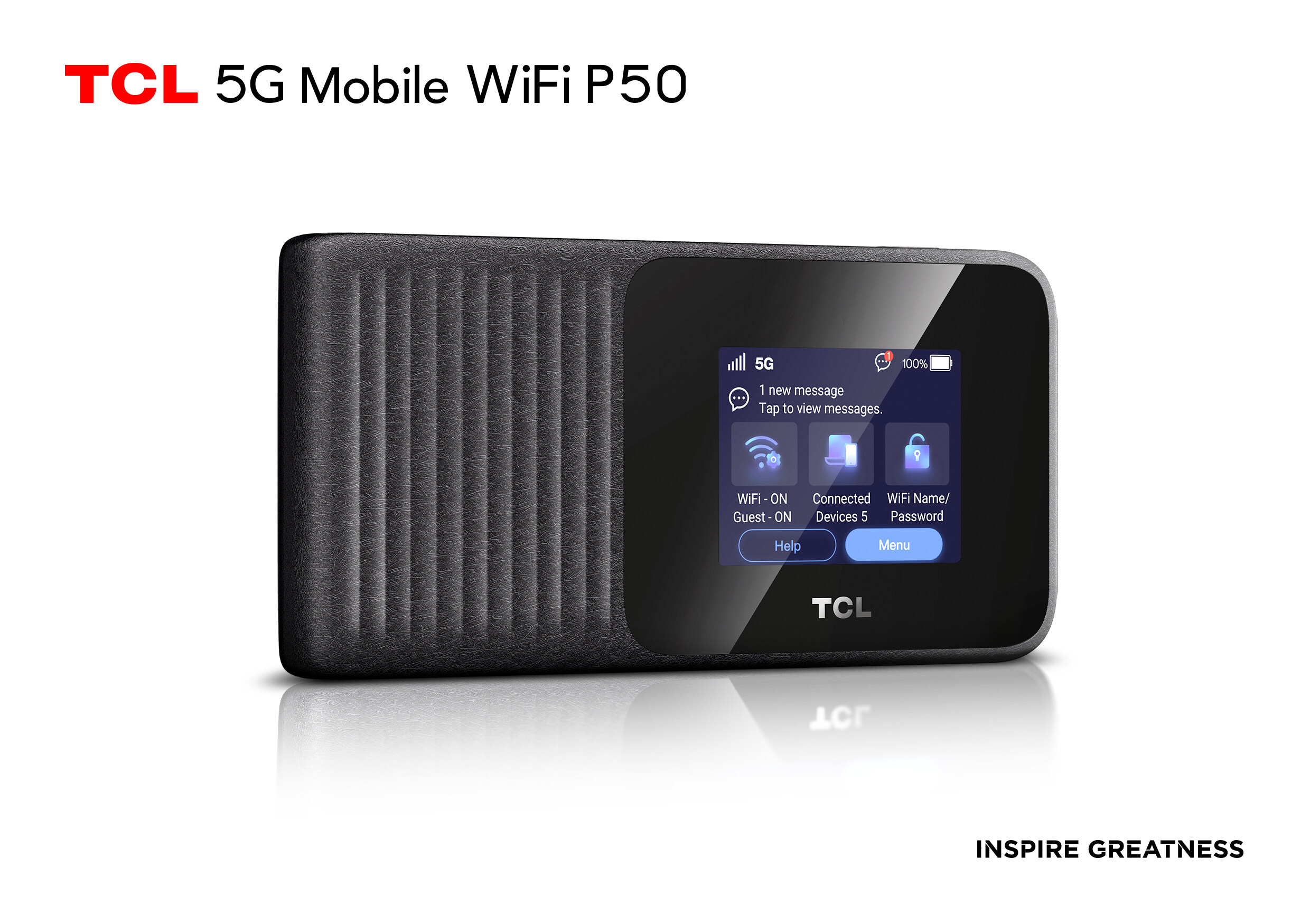
TCL is done waiting for the future of connectivity; it just launched it. At CES 2026, the company unveiled the 5G Mobile WiFi P50 and WiFi Router BE36, two devices designed to cover the entire spectrum of modern connectivity needs, from your backyard to your basement office.
The TCL 5G Mobile WiFi P50 is more than a pocketable hotspot. It’s the first 5G mmWave mobile router that also supports both fast charging and wireless charging. It packs a 5000mAh battery for up to 12 hours of portable use, doubles as a power bank, and features a 2.4-inch touchscreen for live network stats. On the connectivity side, it delivers up to 3.97Gbps via full-spectrum 5G (mmWave + Sub-6), and tri-band Wi-Fi 7 speeds topping 5.8Gbps for up to 64 devices. There’s even a Gigabit Ethernet port for times when wireless just won’t cut it.
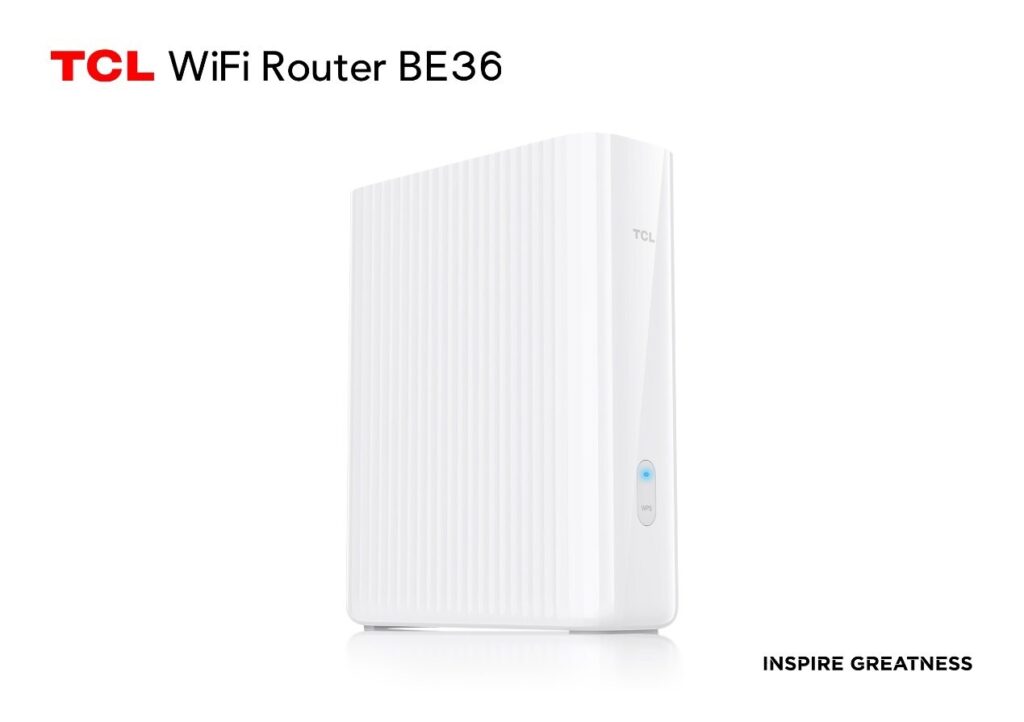
While the P50 is built for mobility, the TCL WiFi Router BE36 is focused on home performance. It offers 3.6Gbps Wi-Fi 7 across dual bands, supports up to 512 device connections, and leverages 3T3R (2ss) antenna tech to boost range. It’s EasyMesh R6 compatible too, meaning you can deploy multiple units to blanket large homes in a seamless, zero dead-zone network.
Security hasn’t been left behind either. The BE36 includes firewall-level protection with malware filters, brute-force attack detection, and smart-home security baked in. There’s even a built-in VPN suite and a dedicated gaming acceleration mode. Rounding it off is a 2.5GE port for serious wired performance.
In related news, TCL also unveiled the RayNeo Air 4 Pro, billed as the world’s first HDR10-enabled AR glasses, alongside the NxtPaper 70 Pro tablet with a dedicated eye-care display and stylus support at CES 2026.