
News
LG Display Says LCD Needs 1.5 Million Dimming Zones to Match OLED Picture Quality
LG Display CEO and president Jeong Cheol-dong said that current LCD technology is still far from matching OLED in picture quality. He made the remarks during an event held in Seoul on September 26, according to South Korean outlet The Elec.
Jeong explained that the most advanced mass-produced LCD technology today is RGB Mini LED. This type of display can support local dimming with tens of thousands of zones. However, he stated that to reach OLED-level picture quality, LCD panels would need at least 1.5 million dimming zones, about 100 times more than the current standard.
OLED panels deliver superior contrast and precise lighting control because each pixel can emit light independently. LCD panels rely on backlighting and require increasingly complex dimming techniques to approach the same level of performance. Jeong’s estimate reflects the technical limitations that continue to separate the two display technologies.
Jeong also spoke about LG Display’s plans for OLED manufacturing. He said the company is still evaluating whether to build a G8.6 OLED production line. Other companies, including Samsung Display, BOE, TCL CSOT, and Visionox, have already announced or started construction on similar facilities. LG Display appears to be taking a more cautious approach.
In addition to OLED, LG Display is investing in the development of Micro LED and other next-generation display technologies. Jeong noted that some of these technologies are already close to reaching commercialization and mass production stages.
His comments suggest that while LCD continues to evolve, OLED remains the benchmark for high-end visual performance. The industry is also preparing for a possible transition to Micro LED, which promises even greater brightness, durability, and modular design, though it still faces manufacturing challenges.
In related news, TCL CSOT is confirmed as the exclusive supplier of both displays for the Xiaomi 17 Pro and Pro Max, while TCL also introduced the Tab 8 NxtPaper 5G tablet with an eye-friendly display and Android 15, priced at $199.
(Via)



News
TCL overtakes Samsung in global TV shipments for December 2025
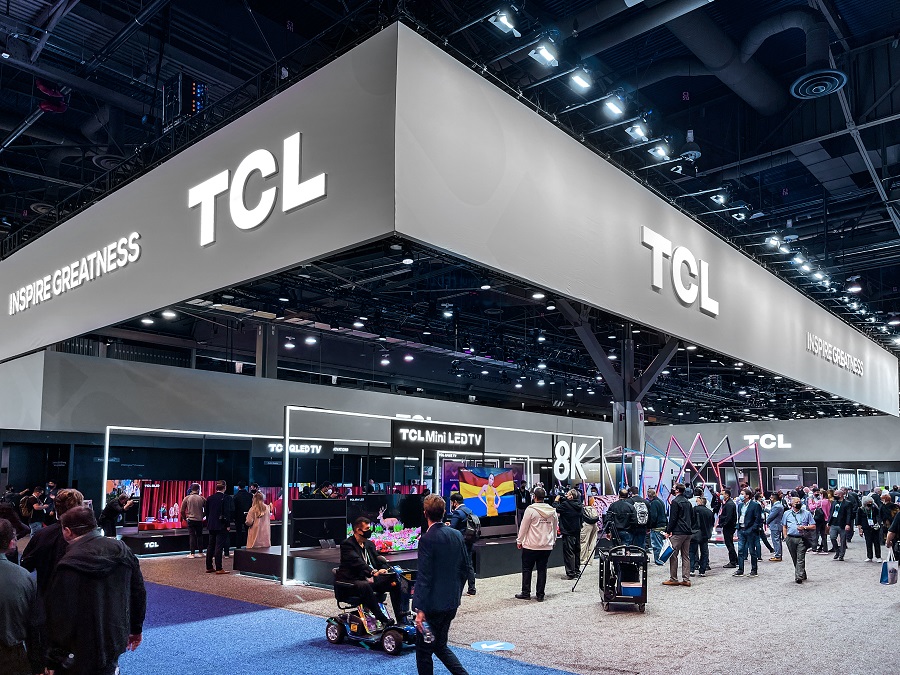
TCL has officially dethroned Samsung as the top global TV shipper for December 2025, according to Counterpoint Research’s latest data. This marks a major milestone for the Chinese electronics giant, whose shipments surged 10% year-over-year (YoY) last month, giving it a commanding 16% market share. Meanwhile, Samsung, the perennial leader, slipped to second place with a 13% share, despite an 8% YoY increase in shipments.
So, what’s behind TCL’s meteoric rise? Aggressive pricing strategies and a robust lineup of mid-range and high-end TVs, including the well-received QM8K and QM9K series, played a key role. The company also launched the budget-friendly T7 series, which was heavily discounted during the holiday season. Combined with strong performance in Asia-Pacific, China, and the Middle East, TCL’s late-year surge was enough to outpace Samsung, at least for December.
However, Samsung still holds the crown for Q4 2025 overall, shipping 2% more TVs than TCL during the period. While North and South America provided growth opportunities for Samsung, declines in Western Europe and the Middle East hurt its performance. On the flip side, Hisense, which took third place in December, saw its shipments plummet 23% YoY, highlighting significant struggles in China’s shrinking TV market.
Looking ahead, TCL’s ambitions could spell bigger trouble for Samsung. The company’s upcoming partnership with Sony’s BRAVIA brand, set to finalize in March 2026, positions TCL to make a serious play in the premium TV market, a territory that Samsung has historically dominated with its high-end OLED and 8K offerings. If TCL can successfully leverage Sony’s reputation in this space, the dynamic of the global TV market could shift dramatically.
For now, TCL’s December triumph might be temporary, but its growth trajectory is impossible to ignore. With a mix of strategic pricing, regional demand timing, and potential premium market expansion, Samsung’s top spot may no longer be as secure as it once was.
News
TCL Shocks Market by Taking Over Sony Bravia TVs

Sony Corporation has announced that it will spin off its home entertainment division and form a new joint venture with TCL Electronics. The partnership gives TCL a 51 percent majority stake, while Sony retains 49 percent. The new company will take control of global operations for Sony’s television and home audio business.
The companies confirmed the agreement through a signed memorandum of understanding. They plan to finalize binding terms by the end of March 2026. The joint venture is expected to begin operations in April 2027, subject to regulatory approvals.
The new entity will handle the entire value chain, including product development, manufacturing, sales, and customer service. Products from the venture will continue to use the Sony and Bravia brand names.
Sony will contribute its picture processing technology, audio expertise, and brand value. TCL will provide its display manufacturing capabilities, global supply chain, and cost-efficient operations. TCL’s recent growth in display technology and global market share positions it to take advantage of Sony’s premium image and distribution network.

Sony CEO Kimio Maki said the partnership aims to create new customer value through combined expertise. TCL Chairperson Du Juan said the deal will allow TCL to scale further into high-end markets and optimize its operations.
Sony has been gradually moving away from consumer hardware in favor of content businesses like anime, film, music, and gaming. The company previously exited the PC and tablet markets and stopped producing Blu-ray players.
This move ends Sony’s independent control of its TV business, which began in the 1960s. The joint venture gives TCL an opportunity to strengthen its position in premium global markets while maintaining the Bravia brand’s legacy. Sony will retain visibility in the home entertainment segment without managing day-to-day hardware operations.
In related news, TCL has introduced the 5G Mobile WiFi P50 and the WiFi Router BE36 at CES 2026, while also unveiling the world’s first HDR10 AR glasses, the RayNeo Air 4 Pro.
(Source)
News
TCL Launches 5G Mobile WiFi P50 and WiFi Router BE36 at CES 2026
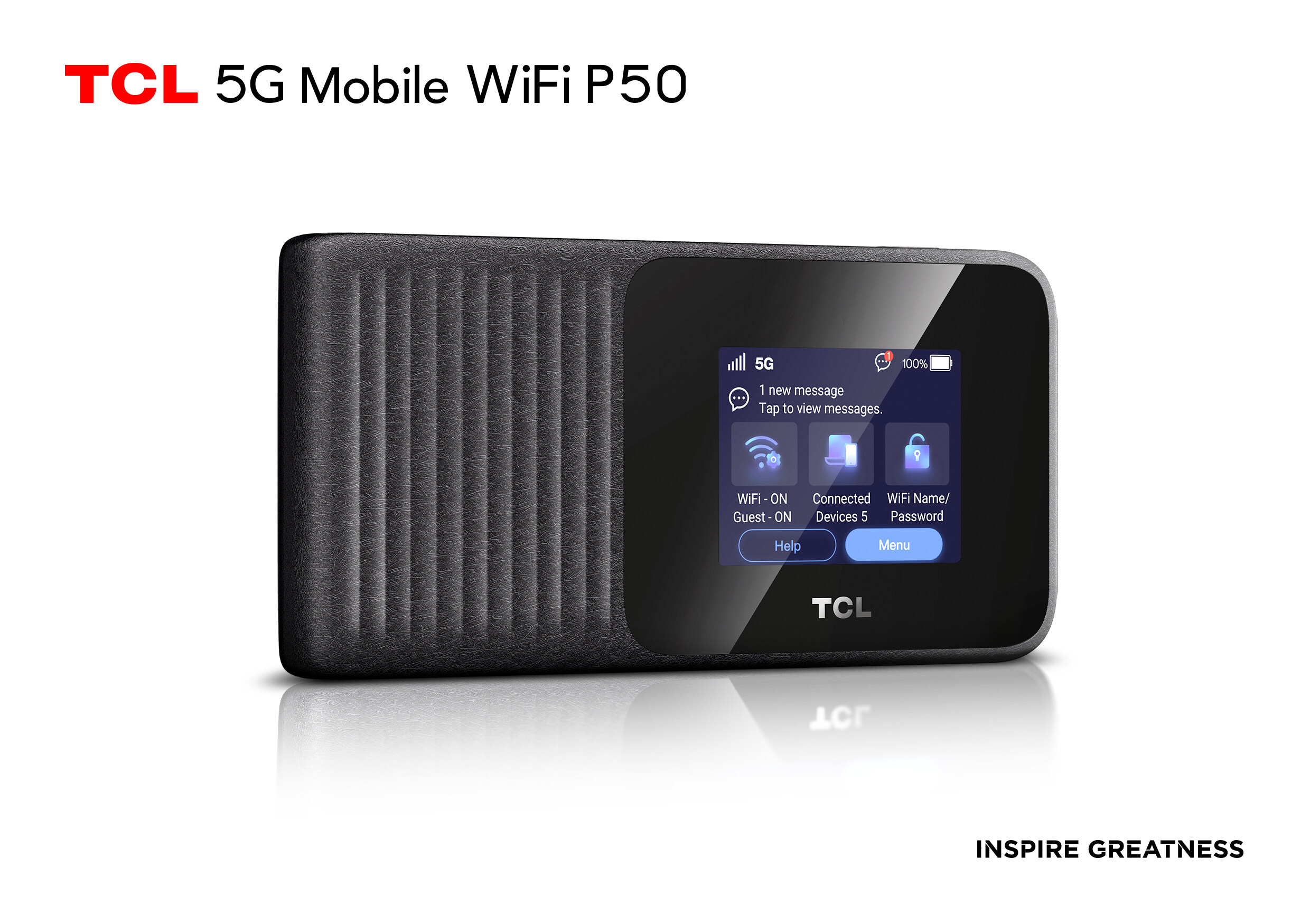
TCL is done waiting for the future of connectivity; it just launched it. At CES 2026, the company unveiled the 5G Mobile WiFi P50 and WiFi Router BE36, two devices designed to cover the entire spectrum of modern connectivity needs, from your backyard to your basement office.
The TCL 5G Mobile WiFi P50 is more than a pocketable hotspot. It’s the first 5G mmWave mobile router that also supports both fast charging and wireless charging. It packs a 5000mAh battery for up to 12 hours of portable use, doubles as a power bank, and features a 2.4-inch touchscreen for live network stats. On the connectivity side, it delivers up to 3.97Gbps via full-spectrum 5G (mmWave + Sub-6), and tri-band Wi-Fi 7 speeds topping 5.8Gbps for up to 64 devices. There’s even a Gigabit Ethernet port for times when wireless just won’t cut it.
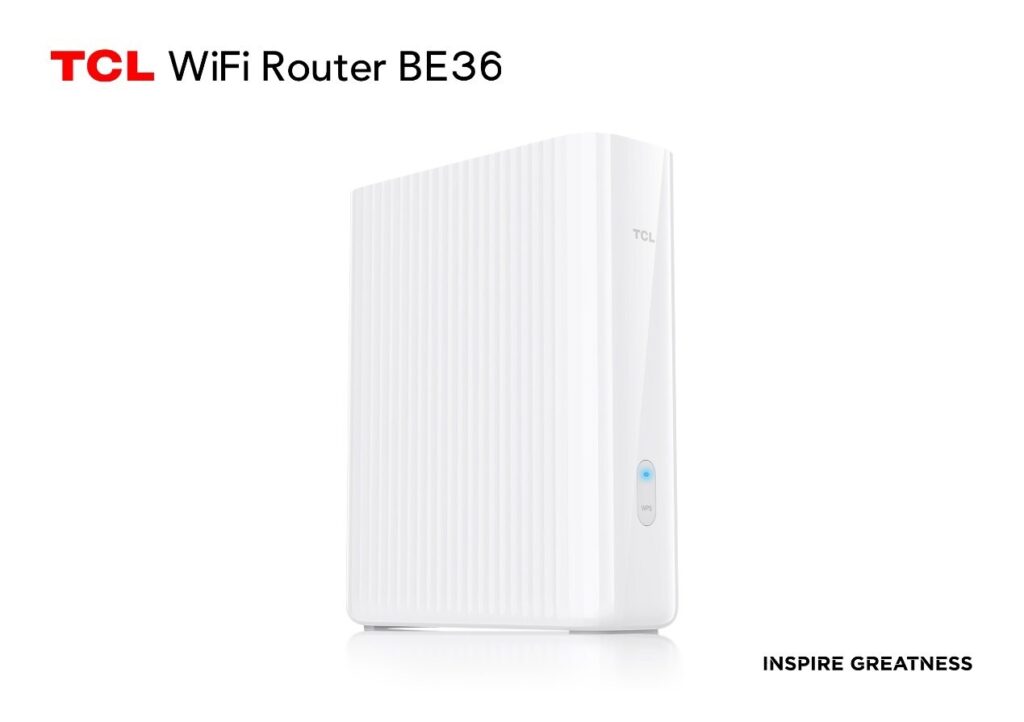
While the P50 is built for mobility, the TCL WiFi Router BE36 is focused on home performance. It offers 3.6Gbps Wi-Fi 7 across dual bands, supports up to 512 device connections, and leverages 3T3R (2ss) antenna tech to boost range. It’s EasyMesh R6 compatible too, meaning you can deploy multiple units to blanket large homes in a seamless, zero dead-zone network.
Security hasn’t been left behind either. The BE36 includes firewall-level protection with malware filters, brute-force attack detection, and smart-home security baked in. There’s even a built-in VPN suite and a dedicated gaming acceleration mode. Rounding it off is a 2.5GE port for serious wired performance.
In related news, TCL also unveiled the RayNeo Air 4 Pro, billed as the world’s first HDR10-enabled AR glasses, alongside the NxtPaper 70 Pro tablet with a dedicated eye-care display and stylus support at CES 2026.